
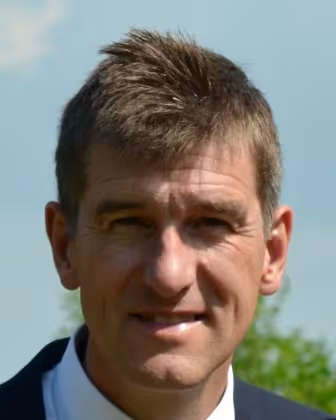
Claes Almberg has 22+ years of singular experience that matches the scope of the PMAC. In particular, his reviewing/hearing some 590 patent cases as a European patent judge and a national patent judge across two instances, and his arguing 10+ further patent cases as a representative. For nearly ten years, he served as the government’s patent law expert in international negotiations and legislative matters: with his focus set on the unitary patent system (the UP/UPC), he was involved in its implementation so deeply and actively, and for so long, that he knows the system inside out. While adjudicating in national courts, he conducted evaluative mediation in civil cases on a weekly basis for several years. Currently, he is Head of legal at boutique IP firm Hansson Thyresson AB (Malmö, Sweden). He leads the legal department as well as advises and represents clients on disputes, contracts, strategy and applications in respect of patents and other IP. (2026-). Meanwhile, he is building his own ADR business as founder of Lidarände Patent AB (2026-). He is registered UPC representative. Previously, he worked as: - European patent judge: re-appointed legally qualified member of the EPO Boards of Appeal (2020-2025); - Patent specialist counsel at Setterwalls law firm (2018-2020); - Senior patent law adviser to the Minister of Justice at the Swedish Government (2009-2018); - Associate patent judge and assistant patent judge at the IP divisions of Svea Court of Appeal and Stockholm District Court (2005-2009); - Law clerk at Nacka District Court (2001-2003). His understanding of the commercial aspects of patents extends beyond his experience from disputes and litigation acting as a representative at a leading law firm, and now at the IP firm. Thanks to the holistic approach to patents and other IP offered by the IP firm, matters relating to strategy, negotiations and contracts form part of his day-to-day consultancy practice. While working on patent policy for the government, he had extensive contacts with industry to understand their priorities and need for reform. For the government, he negotiated patent law in most international forums, and drafted key parts of the new Patents Act. This gave him a rare combined overview and in-depth knowledge of patent law as a whole. His experience extends to other IP rights such as trademarks, designs, trade secrets and copyright, which he dealt with in the national courts, international negotiations and legislative work, and currently at the IP firm. He thus possesses extensive knowledge also of the 'related disputes' covered by PMAC's scope. He is a lawyer and a judge by profession who studied the law at universities in Sweden, Canada and France, and a bit in England, and received an award for each stage. He was selected for judicial internships at the EPO Boards of Appeal, and he lived in Munich while later adjudicating there. He acquired his technical understanding mainly through practical experience while handling hundreds of patent cases across most technical fields. He took natural sciences in secondary school. He has no university degree in technology.
As the reporting judge in civil cases in Swedish courts, he always conducted evaluative mediation during the oral preparations. With all parties present, he would first express a cautious preliminary view on key issues of law, evidence, and fact. He would then ascertain the parties' respective priorities in private, confidential sessions and attempt to find common ground. It was a balancing act promoting clarity while avoiding bias (in view of any final decision). He mediated at least once a week for about four years. He brokered settlements in approximately two-thirds of the cases, and he was never accused of bias.
Whilst working for the government, he gave regular speeches and took part in panel discussions, at conferences and elsewhere, specifically on unitary patents and the UPC, a reform in which Sweden played a leading role within the EU. As Head of delegation to the EPO Select Committee (responsible for the implementation of the unitary patent protection), he made a large number of interventions speaking on Sweden's behalf. Whilst at the law firm, he lectured, both internally and externally, again on unitary patents and the UPC. He has also led a number of seminars for PhD students and undergraduates in legal theory, at Stockholm University, applying his experiences as a national judge and government expert.